
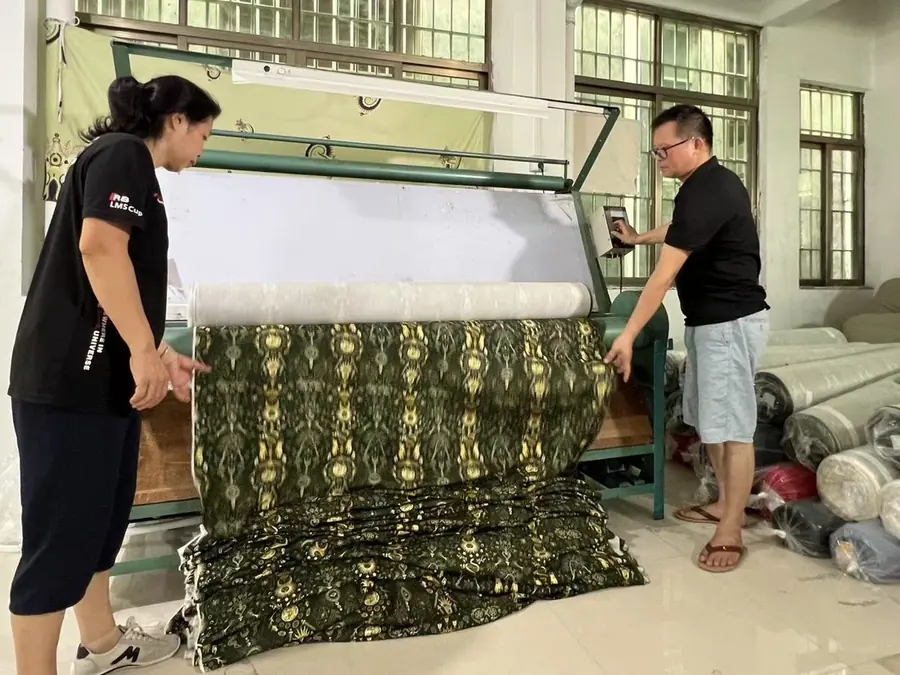
The softest swatch on the table is not automatically the best fabric after sewing, washing, and packing.
Translate the product idea into fabric requirements
Start with the garment: a loose pajama shirt, fitted camisole, lounge pant, robe, and beach short ask different things from the fabric. Define stretch, drape, opacity, warmth, drying speed, and surface appearance before naming a fiber.
This keeps fabric sourcing open enough to compare practical alternatives at the target cost.
- Garment shape and fit
- Climate and wearing duration
- Target hand feel and appearance
Ask what changes after washing
A swatch should be evaluated for shrinkage, spirality, pilling, colorfastness, and recovery. For prints, check color migration, registration, and whether the print changes the hand feel.
Testing requirements depend on the market and buyer standard. Confirm the test plan before bulk production instead of assuming every fabric has the same performance.
- Dimensional stability
- Colorfastness and pilling
- Stretch and recovery
- Print or dye performance
Use weight and construction together
GSM is useful, but it does not tell the whole story. Knit structure, yarn, finishing, stretch, and surface treatment can make two fabrics at the same weight behave differently.
Request a swatch or sample garment and record the approved construction, composition, width, weight tolerance, and finish in the order documents.
- Fiber composition
- Fabric construction
- Weight tolerance
- Approved finish
Compare total product impact, not fabric price only
A cheaper fabric can create higher cutting waste, sewing difficulty, returns, or packing problems. A more expensive fabric may also be unnecessary if the product position does not benefit from it.
Review fabric cost together with yield, workmanship, testing, packaging, and expected selling environment.
- Consumption and cutting loss
- Sewing and finishing difficulty
- Quality risk and customer expectation