
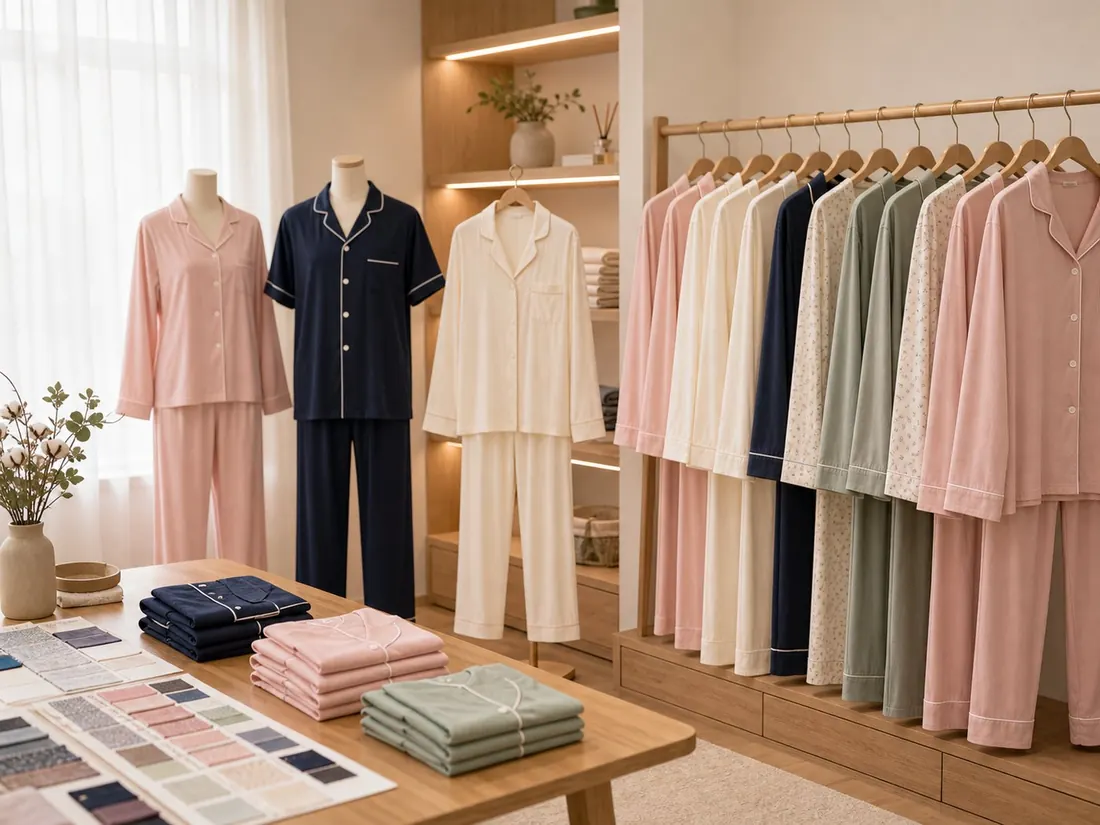
A clear use case is more useful to a factory than a list of fashionable adjectives.
Start with the wearer
A pajama set for a warm-weather online brand is not developed in the same way as hotel sleepwear or an autumn wholesale range. Age group, preferred fit, modesty, mobility, and local sizing all affect the pattern and fabric choice.
Tell the supplier who the product is for and how it should feel. A sentence such as ‘relaxed fit for warm nights, not transparent after washing’ gives the development team something measurable.
- Target customer and market
- Expected fit and coverage
- Sales channel and price position
Describe climate and wearing conditions
Fabric names alone do not define comfort. Humidity, air conditioning, seasonal temperature, and whether the garment is worn for sleeping or daytime lounging change the useful fabric weight and construction.
If the range will sell across several climates, consider separating it into light and mid-weight options instead of forcing one fabric to solve every use case.
- Season and destination market
- Indoor temperature and humidity
- Sleepwear or all-day loungewear
Include washing and packing realities
Sleepwear is washed repeatedly. Shrinkage, twisting, color transfer, pilling, print hand feel, and seam recovery matter more than how soft an unwashed swatch feels.
For e-commerce, also review how the garment looks after folding and shipping. A fabric that creases heavily can create a poor first impression even when the sewing is correct.
- Expected washing method
- Colorfastness and shrinkage expectations
- Folding and retail packing method
A useful first inquiry can still be short
You do not need a complete tech pack to start. Send a reference image or sample, target customer, quantity range, size range, destination, preferred hand feel, target delivery date, and label or packing needs.
The supplier can then identify missing decisions and recommend the right next step before time is spent on detailed artwork or repeated samples.
- Reference image, sample, or sketch
- Quantity and size range
- Fabric direction and target delivery
- Labels and packaging