
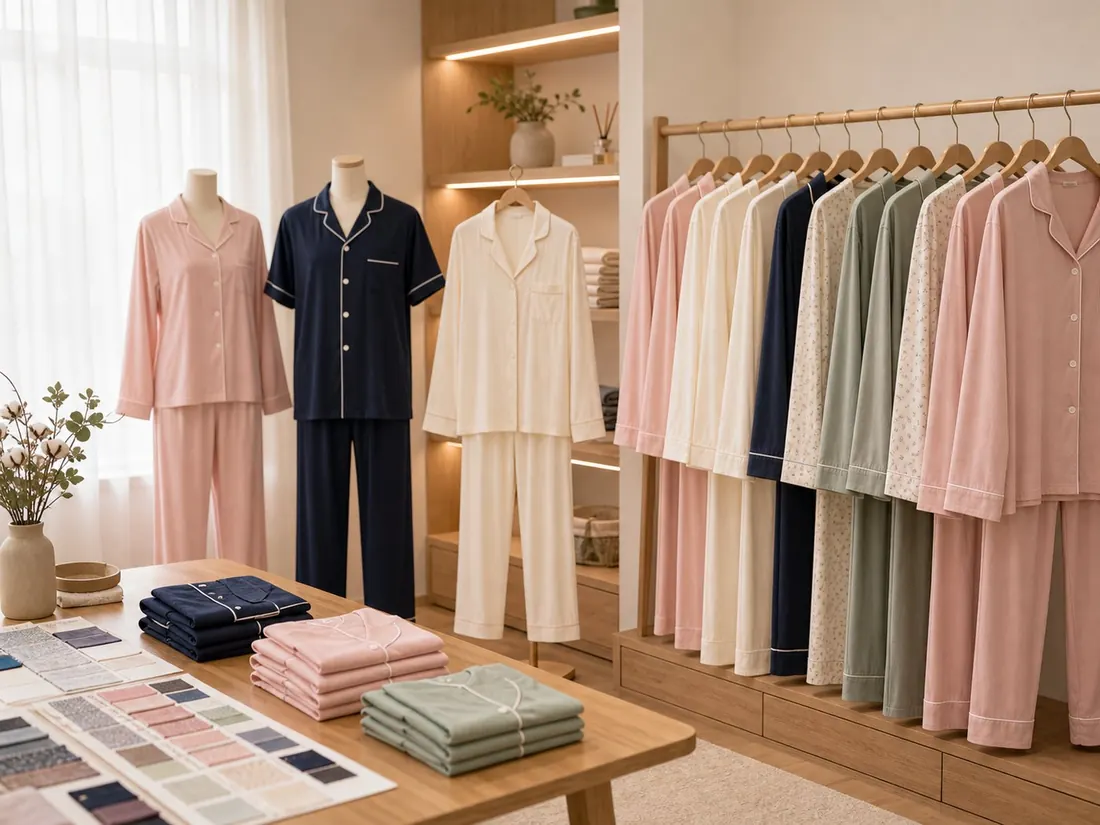
Ready stock is not automatically low quality, and custom production is not automatically the better business decision.
Start with the risk you need to reduce
A new brand may need to test demand without holding too much inventory. An established buyer may need exact fabric, fit, packaging, and repeat-order consistency. Those are different problems, so they should not be sourced in the same way.
Before comparing quotations, decide which matters most for this order: launch speed, low commitment, product ownership, margin control, or long-term repeatability.
Ready stock works best when speed and testing come first
Ready-stock products can help a buyer test a category, fill a short-term sales window, or build a small assortment without waiting for full development. The tradeoff is that available colours, sizes, fabrics, and quantities are limited by current inventory.
Ask whether stock is physically available, whether all sizes come from the same production batch, and whether replenishment is realistic. Also confirm exactly what can be changed. Labels, simple packing, or a hang tag may be possible, while fabric and construction usually are not.
- Best for demand testing and short lead times
- Lower development commitment
- Less control over fabric, fit, colour, and replenishment
Custom production works when the product needs to belong to your brand
OEM or ODM production is more suitable when the buyer needs a defined fit, exclusive colour, selected fabric, custom print, branded trims, or repeatable specifications. It requires more decisions before production and usually a higher commitment per style.
The benefit is control. Once the sample, measurement chart, materials, labels, and packing are approved, the same specification can guide bulk production and future repeat orders.
- Best for a differentiated and repeatable product
- More control over fit, materials, branding, and packing
- Requires sampling time, clear approvals, and production planning
A hybrid route can be more sensible than choosing one side
Some buyers start with a small ready-stock selection to learn which silhouette, size range, and price point customers respond to. They then move the strongest direction into custom development for the next season.
Another option is to keep core basics in ready stock while developing one or two signature styles through OEM production. This protects launch speed without making the entire assortment look interchangeable.
Send these questions before asking for a final quotation
- Is the quantity physically in stock now, and how long is it reserved?
- Which colours and sizes are available from the same batch?
- What branding or packing changes are possible?
- For custom production, what decisions determine MOQ?
- What is the sampling route and what must be approved before bulk?
- Can the same fabric and trims be sourced for a repeat order?
A reliable supplier should be able to explain the limits of each route. A clear “this cannot be changed” is more useful than a vague promise that everything is possible.