
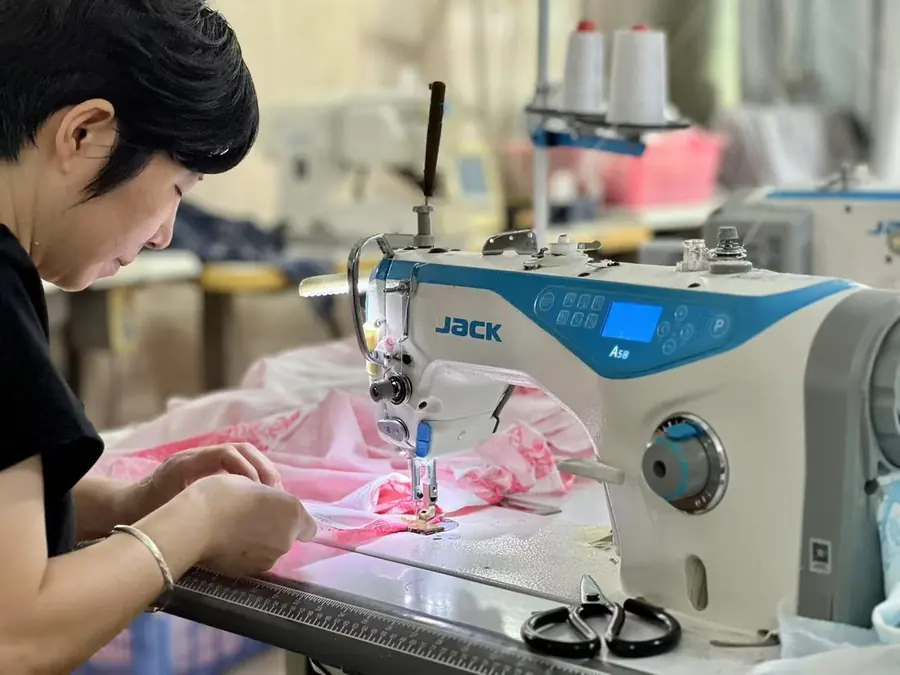
A sample approval should record decisions. A photo and a short ‘looks good’ message are not enough for bulk production.
Review fit on the intended size
Check balance, shoulder position, rise, crotch depth, sleeve and trouser length, waist comfort, and movement. Loose sleepwear still needs controlled proportions; simply adding width can create dragging hems or an unstable neckline.
Use the intended base size and confirm how the measurements grade across the full size range.
- Base-size measurements
- Movement and coverage
- Grading rules
Inspect construction, not only appearance
Look at seam type, stitch density, piping, button spacing, pocket position, elastic insertion, drawcord security, and stress points. Turn the garment inside out and compare both sides.
Mark every revision on one consolidated comment sheet so the next sample does not solve one issue while reintroducing another.
- Inside seam finish
- Fasteners and trims
- Symmetry and placement
- Consolidated revision list
Wash the sample when care performance matters
Measure before and after washing, then review shrinkage, twisting, color change, pilling, print feel, and recovery. Use the care method expected for the final customer.
If a sample uses substitute fabric, do not treat it as final approval for hand feel, shade, or performance.
- Before-and-after measurements
- Approved care method
- Final fabric confirmation
Freeze the approved details
Before bulk production, confirm the approved sample reference, measurement chart, fabric and color, artwork, labels, packaging, quantity breakdown, and acceptable tolerances.
A clear approval pack reduces arguments later because the buyer and supplier are checking against the same standard.
- Sealed sample or sample ID
- Final tech pack and artwork
- Packing specification
- Quality tolerances