
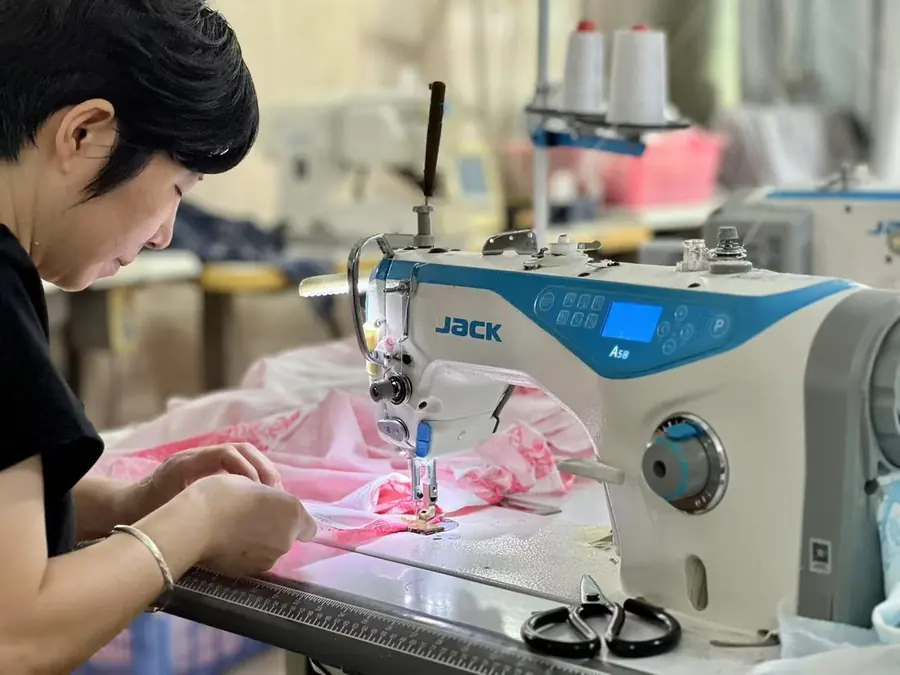
A small order should reduce uncertainty. Adding too many variables makes the result harder to interpret.
Keep the first style focused
It is tempting to use the first order to test several colours, prints, trims, and packing ideas. Each additional variable increases development work and makes production results harder to compare.
Start with one clear core style. Stabilise the neckline, sleeve or trouser shape, fabric, and key colour direction, then use customer feedback to decide what belongs in the next order.
Choose fabric that can be sourced again
An unusual fabric may help a product stand out, but it can also bring higher minimums, shade variation, shrinkage risk, longer lead time, or poor repeat availability.
For a trial order, a stable material with reliable hand feel and replenishment is often more useful. If a special material is essential, confirm repeat sourcing before the first order is placed.
Do not divide every colour and size equally
Use the target customer and sales channel to build a size and colour ratio. Core colours can carry more units while experimental colours remain controlled. Focus the size range on the likely selling curve rather than forcing equal quantities into every size.
This does not remove demand risk, but it makes the first inventory decision more deliberate.
Review more than the number of units sold
After launch, record returns, fit comments, wash feedback, colour preference, packaging damage, and questions customers asked before buying. Compare those observations with the original product assumptions.
The value of a trial order is the quality of the next decision. Use the findings to adjust the repeat order, not only to judge the first sell-through number.
- Stabilise one core style first
- Prioritise fabric that can be replenished
- Plan colour and size ratios around likely demand
- Record returns, wash feedback, and packing issues