
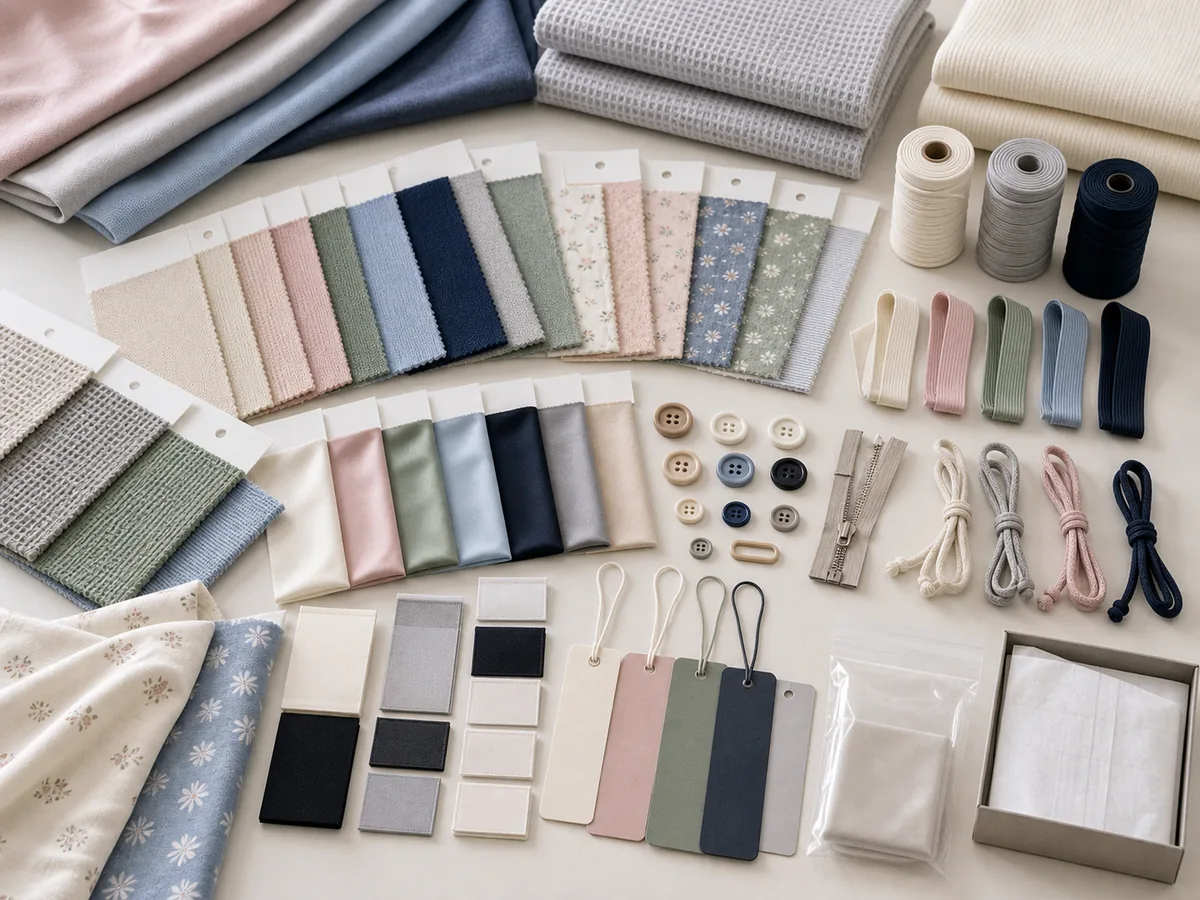
Before requesting a custom shade, decide whether you are selecting an available fabric colour or developing a new one. Ask the supplier to confirm the material route and approval steps before treating a colour name as a production instruction.
Make every colour submission identifiable
Start with the intended fabric and a usable colour reference. A brand name such as “cloud blue” can sit alongside a physical swatch or a specified textile colour standard, but should not be the only production reference. Where a colour code is used, name the reference system as well. If you provide both a garment and a colour card, identify which one governs the decision.
For stock fabric, ask whether the swatch represents the lot currently offered or a general range card. For custom dyeing, ask whether the proposed material can follow the required development route, and confirm the quantity, cost and scheduling implications. Neither route should be assumed from a photograph.
Give each submission a fabric code, colour reference, round number and option ID. Record any material or finish difference from the intended bulk specification. Avoid approvals such as “use the second one” that lose meaning when an email attachment is reordered.
Agree how the comparison will be made
Ordinary screen images are useful for discussing a submission, but are not a controlled colour measurement. Agree a physical comparison process or a specified digital colour workflow. Confirm the viewing conditions before reviewing samples, rather than introducing a new light source after the fabric has been produced.
Two materials can appear to match under one light source and differ under another. This is metamerism; X-Rite explains the effect and why lighting matters. For a coordinated set, discuss the lighting conditions relevant to the buyer's approval process and assess the components together.
If instrumental results are required, specify the measurement method, conditions and acceptance rule with the party doing the work. Confirm who can supply the report. A colour-difference number without its method and conditions is an incomplete requirement; this guide does not prescribe a universal tolerance.
Separate the lab-dip decision from bulk release
A lab dip is a small dyed-material submission used to assess a proposed colour. Its approval does not establish that every later production lot has been checked. Set out the required sequence: which submission permits dyeing, what bulk shade evidence is required, and who can release material for cutting.
- Development submission: identify the selected option and the material it covers.
- Bulk submission: connect the sample and decision to the production lot or roll references.
- Cutting release: state which material is released and which open points still prevent its use.
The sequence should be agreed for the order. Keep shade acceptance separate from fit, wash performance and other quality approvals. A colour sign-off does not close those checks. Use the fabric specification and garment sample review to keep the remaining decisions visible.
Review the set and define lot allocation
A top, trouser fabric and piping may each receive an individual approval without the combination delivering the intended look. State whether the design calls for a close match, a coordinated shade or deliberate contrast. Review the actual combination before accepting it.
When bulk material comes from more than one lot, ask how approved combinations will stay identifiable through cutting, sewing and packing. Record which references belong together. If a lot does not work with the intended partner material, identify the affected quantity and obtain a decision before substituting or mixing it.
This is a coordination requirement to discuss with the supplier, not an assumption that every factory has a particular colour laboratory or lot-control system. Establish a practical method for the order and retain the agreed references for follow-up.
Issue a decision that can stand on its own
A short approval record can prevent several rounds of clarification. Include:
- Style, buyer colour name and governing reference.
- Fabric or trim code, submission round and selected option.
- Actual review conditions and any agreed measurement result.
- Decision, approver and date.
- Materials and production steps covered by the decision.
- Outstanding items, next submission and location of retained references.
For example: “Style A / cloud blue / fabric F01 / round 2 option B: approved as the main-fabric colour reference under the recorded review conditions. Piping remains pending. Submit identified bulk-lot samples for the agreed shade review before cutting release.” This is an illustrative record, not an actual order or a mandatory production sequence.
If a correction is needed, identify the reference and the observed difference, then state whether a new submission is required. Do not leave a request to adjust the colour inside an otherwise unqualified approval.
For technical background, Datacolor's textile colour management guide discusses material variation, defined standards and evaluation conditions. The purchasing checklist here is a way to organise those conversations; project-specific testing and material feasibility still need confirmation.